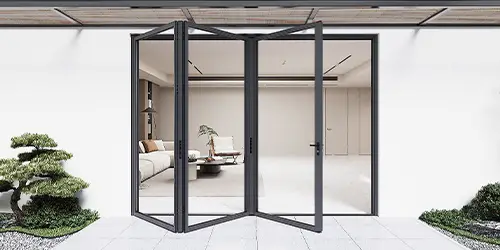
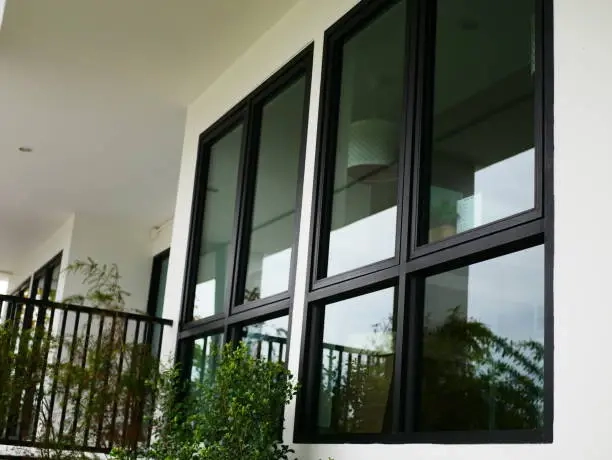
Thermal break aluminum windows are featured in many new homes, villas, apartments, and light commercial projects. People choose aluminum windows due to their look, ability to support large span of glass and good structural performance. Many buyers however would like to know if aluminum windows can be well insulated.So before ordering any thermal break aluminum windows, we believe that it is very important for buyers to study not just the aluminum window frame but also the glass selection, the sealing system, the hardware, the drainage system and the way in which the windows are being installed. Only then can buyers have confidence that all the features and benefits of a quality aluminum window can be delivered to them in their project.
Glass Choice Is Just as Important
A thermal break frame forms only one component of the full window system. Glass occupies most of the window area. Therefore glass selection exerts major influence on energy efficient windows. A strong frame combined with basic glass can still permit excessive heat transfer.
Low-e glass reflects heat while still permitting natural light to enter. The original text has been rewritten following all specified guidelines. The final output appears below with no additional comments. The most suitable glass specification changes depending on the local climate, building purpose, noise control requirements, and the project budget that is available. The process starts with a detailed review of these factors. This careful step helps confirm that the chosen glass will deliver the expected performance. For example, insulated glass delivers improved thermal efficiency. Low-e glass reflects heat while still permitting natural light to enter.
Insulated Glass
Insulated glass consists of two or more panes separated by a sealed air or gas cavity. This cavity slows the transfer of heat. When compared with single glass insulated glass improves indoor comfort levels. It also reduces sudden temperature changes next to the window.
It can help reduce:
- Winter heat loss
- Summer heat gain
- Outdoor noise
- Condensation risk
- Indoor temperature swings
Double insulated glass serves as the standard choice for most modern homes. Triple glass finds application in colder climates or higher-performance projects. Yet it increases both weight and cost. The frame and hardware must possess sufficient capacity to support the added load.
Low-E Glass
Low-e glass carries a thin coating designed to manage radiant heat. It limits heat transfer while it continues to admit natural light. In hot climates low-e glass paired with suitable shgc values reduces solar heat entry. In cold climates the coating specification often emphasizes retention of indoor warmth.
Low-e glass proves especially valuable for large fixed windows, sliding doors, floor-to-ceiling windows, and any rooms that face the sun. These locations receive higher levels of light and heat. As a result glass performance gains greater significance.
At OUNA our aluminum windows can be configured with various glass structures and opening styles. We evaluate glass, frame, sealing, and project climate as an integrated package. No single component determines final performance by itself.
Frame Details That Affect Performance
Profile Depth and Structure
Profile depth influences strength, glass capacity, and available insulation space. Deeper frames can accommodate larger glass units and more robust hardware. Depth by itself however does not guarantee superior quality. The arrangement of internal chambers and the exact position of the thermal break also affect results.
Buyers may request profile drawings before they order custom windows. These drawings allow confirmation of thermal break location, glass pocket dimensions, drainage paths, and hardware mounting areas.
Sealing Layers
Sealing layers control air flow, water penetration, and noise transmission. A window equipped with inadequate seals may still permit drafts even though the frame includes a thermal break. For energy efficient windows sealing quality ranks among the most critical considerations.
Buyers need to check how the sash meets the frame. They should count the number of sealing points. They must also see if the gasket material suits local climate conditions. Good seals need to keep steady performance. This holds true even after many cycles of opening and closing.
Choosing the Right Window Type
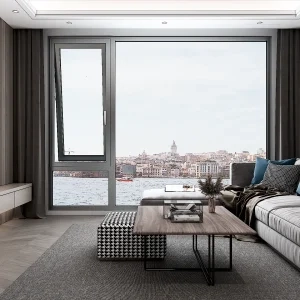
Thermal break windows can be produced in several opening styles. Each style offers distinct advantages. The appropriate selection depends on room function, ventilation requirements, desired view, available space, ease of cleaning, and sealing performance needs.
At OUNA our products include casement windows, sliding windows, awning windows, folding windows, aluminum doors, and entry door systems. These options address different project demands. We provide custom design and manufacturing that aligns with project aesthetics, local climate, and expected daily use.
Casement Windows
A casement window opens on hinges and normally achieves a tight seal when locked. This feature makes casement windows a dependable option for bedrooms, living rooms, villas, and areas often affected by strong wind. Casement designs usually provide good performance in energy efficient windows. They work well when paired with thermal break frames, insulated glass, low-e glass, and multi-point locking hardware. Customers need to check hinge strength, the number of locking points, gasket quality, and opening direction. They should complete these checks before they place an order.
Sliding Windows
A sliding window travels along a track. This design works well for balconies, kitchens, corridors, and any room where a swinging sash would prove impractical.
In sliding thermal break windows track quality receives close attention. Rollers must operate smoothly. At the same time the sealing system must remain stable over time. Drainage provisions also require review because sliding tracks can accumulate water and debris.
Fixed and Awning Windows
Fixed windows do not open. They therefore provide excellent airtightness and water resistance. Designers often specify them for large views, stairwells, and contemporary living areas. For sizable fixed glass the chosen u-factor and shgc values should correspond to local climate conditions.
Awning windows open outward from the bottom edge. They appear frequently in bathrooms, kitchens, and smaller wall openings. These windows support ventilation while they help prevent light rain from entering interior spaces.
Conclusion
Thermal break aluminum windows provide a dependable option for modern homes, villas, apartments, and light commercial buildings. These windows cut down on heat flow through the aluminum frame. They also maintain the slim profile, structural strength, and long-term durability that aluminum windows normally deliver. Yet a thermal break frame by itself does not guarantee strong performance. Insulated glass, low-e glass, suitable u-factor, proper shgc, sealing layers, drainage design, hardware quality, and expert installation all affect overall results. Buyers achieve the best outcomes when they select the window system according to the local climate, room functions, opening sizes, and long-term comfort requirements. Clear specifications combined with a supplier that delivers custom project support lead to the most satisfying results.
FAQs
Q:Are thermal break windows better than regular aluminum windows?
A:Yes. Thermal break windows reduce heat transfer through the aluminum frame.
Q:Do thermal break windows need insulated glass?
A:Yes. Insulated glass helps the full window system perform better.
Q:Is low-e glass useful with thermal break windows?
A:Yes. Low-e glass helps control radiant heat and supports energy efficient windows.