
How to Clean Window Screens Without Making a Mess
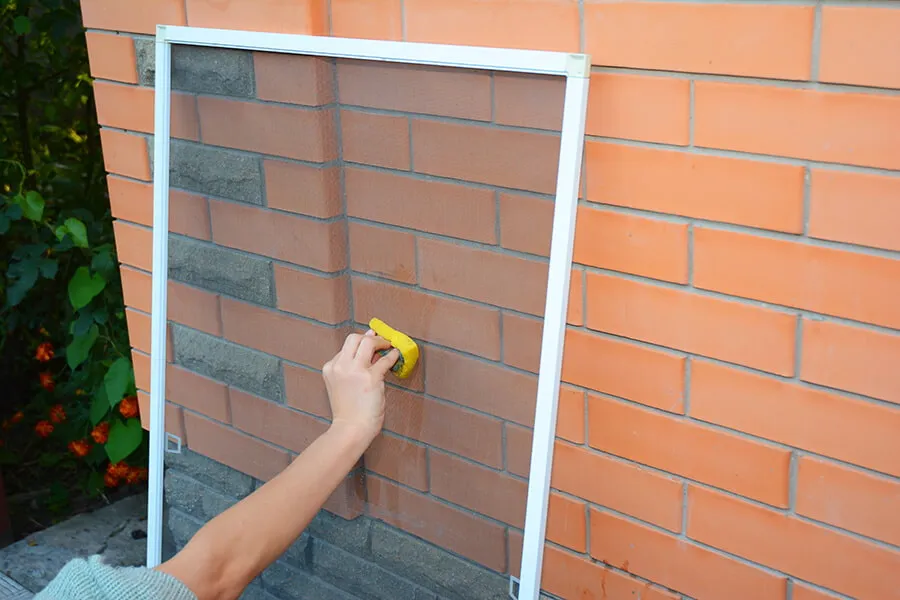
I usually notice dirty window screens in the most annoying way. The glass is clean, the sun comes in, and the room still looks dusty. Most of the time the glass is not the problem. The screen is.
Screens hide dirt well. Pollen sits in the mesh. Small leaves catch in the corners. A window facing a road can pick up a gray film that barely shows until you wipe one little patch. Then the rest of the screen suddenly looks old.
So if you are looking up how to clean window screens, start with this: be gentle. A screen is not a floor mat. It is a thin mesh inside a light frame, and the frame bends faster than people expect.
Check the screen first
Hold the screen by two sides, not one corner, and look it over. Is the frame square? Is the mesh loose along the edge? Are the tabs still firm? If the rubber spline is pulling out, washing will not fix that.
A torn screen can look nicer after cleaning, but bugs will still find the hole. Same with an aluminum frame screen window that no longer sits flat. Clean it if you want, but it may be time to repair or replace it.
For a sliding window with screen, look down in the bottom track. That is where grit hides. For a screen casement window, be careful around the clips. Those little pieces are easy to bend when you are in a hurry.
Take it outside if it comes out easily
If the screen comes out without a fight, wash it outside. You can rinse both sides, and you will not send dirty water into the sill.
Open the window, release the tabs, and lift gently. If it does not move, stop for a second. Something may still be locked, or the frame may be sitting in the channel at the wrong angle.
Sliding screens usually lift up first, then come out from the bottom. A mesh screen sliding door may need to be raised a little so the rollers clear the rail. Big screens are awkward. Two hands, or two people, are better than grabbing one corner and hoping.
Brush off the dry stuff
Dry dust should come off dry. Lay the screen on an old towel, lean it against a wall, or set it flat on a clean driveway. Use a soft brush or a vacuum with a brush attachment.
Do this before water. Once pollen gets wet, it turns into gray streaks and you end up wiping the same area three times. I have made that mistake. It is annoying.
Wash with mild soap
Use warm water and a little dish soap. A small splash in a bucket is enough. The water should feel slightly slippery, not full of foam.
Wipe one side with a sponge or microfiber cloth, then turn the screen over and wipe the other side. Keep your hand light. If one spot is sticky, let the soapy water sit there for a minute and come back to it.
Do not scrub hard in one place. Fine mosquito screen can stretch, and older mesh can pull loose at the edge. Also skip bleach, rough pads, and pressure washers. A pressure washer feels tempting until it pushes the mesh out of shape.
Rinse slowly
Use a garden hose on a gentle spray. Think watering plants, not blasting mud off concrete. Start near the top and let the water run down through the mesh.
If dirty water is still coming off, rinse again. More patience, not more pressure.
If the screen is still installed in the window, use a damp cloth instead of a hose. Too much water in the sill or track just gives you another mess to clean.
Let it dry before putting it back
Let the screen air dry against a wall or on a towel. While it dries, wipe the window track. This matters most for sliding screen windows and mesh screen sliding doors, because a clean screen still drags when the track is gritty.
When you reinstall it, check the fit. The screen should sit flat and lock without forcing. If a corner sticks out, take it back out and reseat it. Forcing the clip usually makes the problem worse.
How often should you clean window screens?
Twice a year is enough for many homes, usually spring and fall. Homes near trees, traffic, construction, coastal air, or dusty yards may need more. Patio screens and sliding doors get dirty faster because people touch them, pets brush against them, and the track collects grit.
Replace the screen if the mesh is torn, the frame is bent, the latch is broken, or the panel leaves a visible gap after installation.
For new aluminum windows and doors, think about the screen before installation. A sliding window with screen, a screen casement window, and a mesh screen sliding door are used differently and cleaned differently. OUNA supplies aluminum window and door systems with screen options for projects that need airflow, insect protection, and practical maintenance.