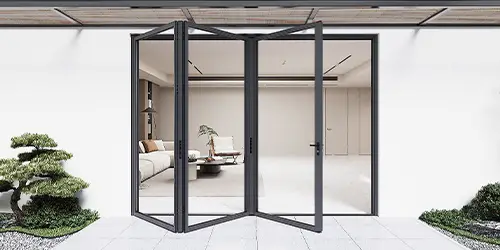

Standard aluminum doors remain strong, slim in profile, and simple to maintain. In warm climates, outdoor heat moves easily through the frame. In cooler climates, indoor heat escapes through the door assembly. Thermal break doors address this issue. These doors use a low-conductivity barrier between the inner and outer aluminum profiles.
At OUNA, we design and manufacture aluminum doors along with related window systems for residential and commercial projects. Our range includes sliding doors, aluminum folding doors, entry doors, pivot doors, and other custom aluminum doors suited to modern building requirements.
Standard Aluminum Doors vs Thermal Break Doors
Standard aluminum doors continue to offer practical benefits. They provide durability, a clean appearance, and suitability for various applications. Thermal break doors carry a higher cost. This results from a more complex frame design and the addition of insulation material. The appropriate selection depends on the door location and the intended use of the building.
A sheltered interior door may not require thermal break construction. However, a large patio door exposed to intense sun or cold winds often benefits from it.
Glass Choice Affects Door Performance
A thermal break frame forms only one element of the complete system. Glass usually occupies most of the door surface. This holds especially true for aluminum sliding doors and aluminum folding doors. If the frame includes a thermal break but the glass performs poorly, the entire door may still underperform. A thermal break frame serves as just one part of the whole door system. Glass normally covers the largest part of the door area. This is particularly important for aluminum sliding doors and aluminum folding doors. If the frame has a thermal break yet the glass does not perform well, the complete door can still fail to meet expected performance levels.
Insulated Glass
Insulated glass appears frequently in exterior aluminum doors. It consists of two or more glass panes separated by a sealed air space. This arrangement limits heat transfer and raises overall comfort levels.
Double glazing meets the needs of many projects. Triple glazing finds use in colder regions. Yet it increases weight and expense. The door frame and hardware must possess sufficient strength to support the added load.
Low-E Glass
Low-e glass carries a special coating. This coating controls radiant heat in an effective way. In warm regions, it blocks solar heat from passing through large glass doors. In cold regions, it helps keep indoor heat inside. Low-e glass offers real value for floor-to-ceiling doors, patio doors, balcony doors, and other large aluminum doors. When it is paired with thermal break doors, the complete assembly delivers better performance in energy-efficient buildings.
At OUNA, our product range can be planned with different glass options, frame designs, and project requirements.
Sealing, Drainage, and Air Leakage
Gaskets and Sealing Layers
Gaskets must retain flexibility and maintain a tight fit over extended periods. Exterior aluminum doors encounter heat, cold, rain, dust, and frequent operation. Low-quality gaskets may degrade faster and create gaps over time.
Buyers should evaluate several factors:
- Gasket material
- Number of sealing points
- Threshold sealing
- Corner sealing
- Panel contact pressure
- Replacement options
These details matter particularly for sliding and folding systems. Such systems feature moving panels and tracks.
Drainage Design
Drainage plays a key role in exterior aluminum doors. Rainwater can accumulate in tracks, sills, and lower thresholds. Effective drainage directs water away from the interior and lowers the chance of leaks.
This aspect holds special importance for aluminum sliding doors and aluminum folding doors. It becomes critical in rainy or coastal locations. Track structure, sill height, and installation slope require careful review before manufacturing begins.
Door Type and Energy Performance
Sliding Doors
Aluminum sliding doors stay popular choices for balconies, patios, and wide openings. They save interior space since the panels slide sideways. They also allow large glass areas and clear views. For solid thermal performance, these sliding doors need strong tracks, dependable rollers, secure seals, and effective drainage. Big panels bring extra weight. So the hardware must handle the glass load. Thermal break aluminum sliding doors bring clear advantages when projects need open sightlines and better indoor comfort.
Folding Doors
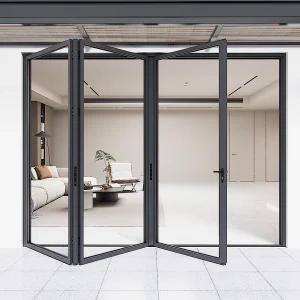
Aluminum folding doors often appear in patios, gardens, restaurants, and poolside areas. They create wide openings. They do this by folding multiple panels to one side or both sides. These doors include several panels, hinges, rollers, and seals. Their performance therefore depends on precise alignment. Thermal break construction reduces heat transfer. Yet the system must also achieve a secure closure. For large openings, buyers should examine panel dimensions, hinge durability, track configuration, and threshold sealing.
Entry and Pivot Doors
These doors must provide security, weather resistance, and an attractive finish. Thermal break design can deliver real value for large entry doors. This is especially important in cold climates or high-end projects. The door needs to include thermal break frames, secure glass or panels, sturdy locks, long-lasting finishes, and precise installation.
Cost and Long-Term Value
Thermal break aluminum doors are generally priced higher than a standard aluminum door. This is due to factors such as the thermal break profile, the use of insulated glass, improved door and sill seals, heavier door hardware and more precise manufacturing. It can be noted that value of thermal break doors extends well beyond energy savings. These doors also provide increased comfort and are able to reduce condensation as well as noise transmission. They also provide a higher quality look to any building and can give it a premium feel.
Are Thermal Break Aluminum Doors Worth It?
Thermal break aluminum doors represent a sound investment when a building requires improved comfort, reduced heat transfer, large glass areas, or elevated energy performance. They remain unnecessary for every indoor or protected opening. Yet they form a wise selection for many exterior applications.
Before deciding, buyers should consider these questions:
- Is the door exposed to outdoor weather?
- Is the climate hot, cold, or windy?
- Is the opening large?
- Does the project need energy performance?
- Will people spend time near the door area?
When most responses turn out positive, thermal break doors usually deserve serious attention. A full system needs to bring together thermal break frames, insulated glass, low-e glass where it fits, reliable hardware, strong sealing, and proper installation.
Conclusion
Thermal break aluminum doors provide a reliable choice for energy-efficient buildings. They work especially well in projects that require comfort, strength, attractive appearance, and steady performance over many years. These doors reduce heat flow through the aluminum frame. They deliver the best results when combined with insulated glass, low-e glass, reliable seals, strong hardware, and precise installation. Standard aluminum doors perform adequately in mild climates or indoor areas. Exterior openings, however, often require better thermal performance. For villas, apartments, hotels, and commercial developments, thermal break doors improve the building envelope.
FAQs
Q: Are thermal break aluminum doors worth it?
A: Yes. They reduce frame heat transfer and improve comfort in energy-efficient buildings.
Q: Do thermal break doors need insulated glass?
A: Yes. Insulated glass helps the whole door system perform better.
Q: Is low-e glass useful for aluminum doors?
A: Yes. Low-e glass helps control radiant heat and indoor comfort.